Wae Rebo 2D1N: Discover the Stunning Hidden Village in the Mountains of Flores

Wae Rebo Tour 2 Days 1 Night from Labuan Bajo

Tucked away in the misty highlands of Flores Island, Wae Rebo Village is often described as a place where time seems to slow down. Far from the busy atmosphere of Labuan Bajo and the pace of modern life, this traditional Manggarai settlement offers insight into a community that continues to live in close harmony with nature and ancestral traditions. Visiting Wae Rebo is not simply about reaching a destination, but about understanding the journey that leads there.

For travelers who want to learn more about how Wae Rebo is commonly reached from Labuan Bajo, including the 2 days 1 night travel route, trekking experience, and overnight stay in the village, detailed information can be found through the Wae Rebo 2D1N tour overview.

More background on travel routes, cultural destinations, and nature experiences across Flores and the surrounding islands is also available through the main travel guide for Flores and Komodo National Park.

This article explores Wae Rebo in depth from its location and cultural significance to daily village life and what visitors can expect during a 2D1N journey to one of the most distinctive mountain communities in eastern Indonesia.

Where Is Wae Rebo Village?

Wae Rebo Village is located in Manggarai Regency on Flores Island, in the eastern Indonesian province of East Nusa Tenggara. Perched at an elevation of around 1,100 meters above sea level, the village sits high in the mountains, surrounded by thick forests, gently sloping hills, and layers of rugged terrain that stretch into the distance. The higher altitude brings cooler air, frequent mist, and a quiet atmosphere that feels noticeably different from the coastal towns below. One of the defining characteristics of Wae Rebo is its remoteness. Unlike many villages that can be reached by road, Wae Rebo has no direct paved access. The journey ends in the lowland village of Denge, from where visitors must continue on foot. The final trek through the forest, which takes several hours, is not merely a physical challenge but an integral part of arriving in Wae Rebo. As the trail winds through dense vegetation and climbs steadily uphill, it gradually separates travelers from the outside world. This isolation has played a crucial role in preserving Wae Rebo’s way of life. Limited access has helped shield the village from rapid development and outside influence, allowing local customs, social structures, and architectural traditions to endure across generations. Rather than being shaped by modern infrastructure, daily life in Wae Rebo continues to follow rhythms defined by nature, community, and ancestral values a rare example of cultural continuity in a changing world.

Why Wae Rebo Is Called “A World Apart”

A Way of Life Far from Modern Distractions

One of the first things visitors notice in Wae Rebo is the absence of modern conveniences. There is no mobile signal, Wi-Fi, or television, allowing daily life to follow the natural rhythm of daylight, weather, and community. Life here moves at a slower pace. Mornings are simple, conversations happen face to face, and evenings are spent together inside traditional houses. This brief disconnection from the digital world often becomes a calming experience, shifting attention toward nature, village life, and genuine human interaction.

A Living Cultural Heritage

Wae Rebo is not a staged cultural attraction, but a living village where traditions continue as part of daily life. Families farm, cook over open fires, weave traditional textiles, and gather communally, just as they have for generations. Visitors are welcomed as guests rather than spectators, allowing village life to be observed as it naturally unfolds. Simple conversations, shared meals, and quiet moments often provide deeper insight into Manggarai culture than formal explanations, reflecting the community’s long-held values of respect and togetherness.

Living in Harmony with the Natural Environment

Wae Rebo is not a staged cultural display, but a living village where traditions continue as part of everyday life. Families grow crops, cook over open fires, weave traditional fabrics, and gather communally, just as their ancestors have done for generations.

Visitors are welcomed as guests rather than spectators, allowing daily village life to unfold naturally. Simple conversations, shared meals, and quiet moments often offer deeper insight into Manggarai culture than formal explanations, reflecting the community’s values of respect and togetherness.
The Iconic Mbaru Niang Houses

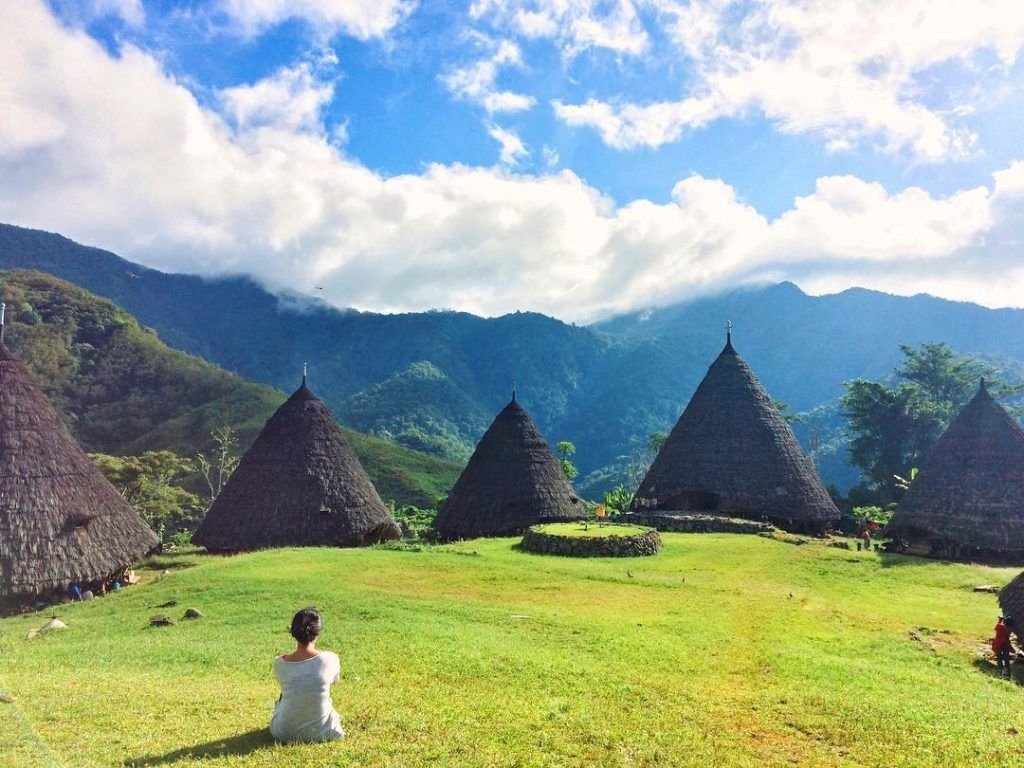
One of the most recognizable elements of Wae Rebo is its Mbaru Niang, the traditional cone-shaped houses that dominate the village landscape. Rising tall against the mountain backdrop, these structures are both visually striking and deeply symbolic.

Architecture and Cultural Meaning

One of the most recognizable elements of Wae Rebo is its Mbaru Niang, the traditional cone-shaped houses that dominate the village landscape. Rising tall against the mountain backdrop, these structures are both visually striking and deeply symbolic.

Spending the Night Inside a Mbaru Niang

An overnight stay inside a Mbaru Niang offers a rare opportunity to experience the village from within. Sleeping beneath the high conical roof, with a shared fireplace at the center, creates a sense of warmth and closeness that contrasts sharply with modern accommodation. At night, the village grows quiet. Without artificial lighting or outside noise, sounds are limited to the wind, insects, and occasional conversation. This simplicity often leaves a lasting impression, as it highlights how comfort in Wae Rebo comes not from luxury, but from shared space and collective living.

Recognition as a Cultural Heritage Site

An overnight stay inside a Mbaru Niang offers a rare opportunity to experience the village from within. Sleeping beneath the high conical roof, with a shared fireplace at the center, creates a sense of warmth and closeness that contrasts sharply with modern accommodation. At night, the village grows quiet. Without artificial lighting or outside noise, sounds are limited to the wind, insects, and occasional conversation. This simplicity often leaves a lasting impression, as it highlights how comfort in Wae Rebo comes not from luxury, but from shared space and collective living.

Overview of the Wae Rebo 2 Days 1 Night Journey

L' 2 days 1 night journey to Wae Rebo from Labuan Bajo is structured to allow time for both travel and immersion. It combines a long overland drive, forest trekking, and an overnight stay in the village, offering a more complete understanding of the place rather than a brief visit.

  • Starting point: Labuan Bajo

  • Ending point: Labuan Bajo

  • Duration: 2 days / 1 night

The itinerary is designed for travelers who value context and experience, allowing the journey itself to become part of the story rather than simply a means of reaching a destination.

Who Is This Tour For?

This tour is ideal for:

  • Cultural travelers

  • Nature lovers

  • Adventure seekers

  • Photographers

  • Travelers looking for meaningful experiences

It may not be suitable for:

  • Travelers with limited mobility

  • Those expecting luxury accommodation

  • Anyone who cannot hike for several hours

Travel Tips for Wae Rebo

  • Wear comfortable trekking shoes

  • Bring a light jacket (nights can be cold)

  • Pack minimal but essential items

  • Respect local customs and traditions

  • Ask permission before photographing villagers

Choosing a Local Travel Operator

Planning a journey to Wae Rebo often involves coordinating long overland travel, trekking routes, and village arrangements. Working with a local travel operator can help ensure the experience runs smoothly, while also supporting responsible travel practices.

Local operators typically have a better understanding of village protocols, trekking conditions, and seasonal factors, which helps create clearer itineraries and more reliable logistics. When managed thoughtfully, this approach also contributes to the well-being of the local community and helps preserve the cultural and natural environment.

Final Thoughts

The Wae Rebo 2D1N experience is more than a journey through mountain landscapes. It is an opportunity to step into a way of life shaped by tradition, community, and a deep connection to nature. In a world that often moves too fast, Wae Rebo offers a rare reminder of the value of slowing down, being present, and reconnecting with simple moments. For travelers who want to understand the village more deeply, learning about the available Wae Rebo journey from Labuan Bajo can provide helpful context on how the experience is structured, from the trek to the overnight stay in the village. Beyond Wae Rebo, there are also many other cultural and nature-based journeys across Flores and the Komodo region that reflect the same spirit of meaningful travel.

If you are looking for an experience that feels quiet, genuine, and lasting, Wae Rebo is not just a destination to visit, but a memory that stays with you long after the journey ends.

Gulir ke Atas